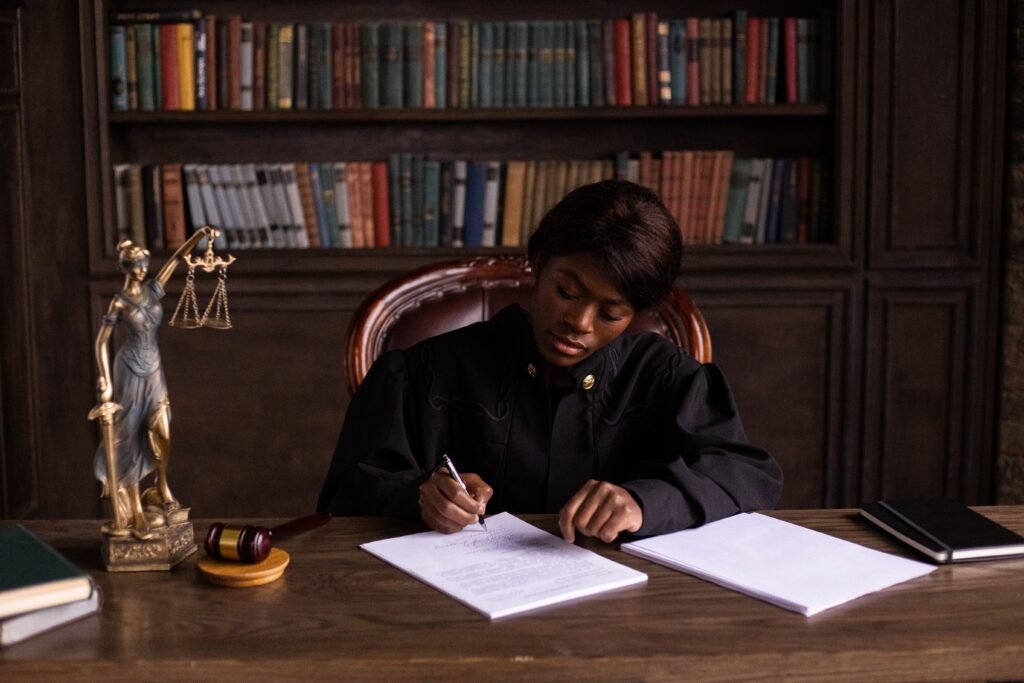
Some of the most humorous misunderstandings that have happened in court cases involving Police Officers ; Serious legal disputes, criminal investigations, and significant rulings are typically linked with courtrooms. Nevertheless, there have been many instances where miscommunications among police officers have resulted in unexpectedly humorous moments despite the professional setting. Miscommunication, incorrect assumptions, language problems, or simple human error are frequently the causes of these situations. Even law enforcement officers, attorneys, judges, and witnesses are susceptible to uncertainty, even though these cases are typically settled swiftly.
Some of the most hilarious miscommunications involving police officers that have happened in courtrooms are included here.
Confusing a nickname with a criminal alias
In one noteworthy instance, a police officer stated in court that a suspect was referred to as “The Professor.” The nickname was used by the prosecution as proof that the suspect was a highly skilled criminal genius.
It became clear that the nickname had nothing to do with criminal activity when the defense questioned the officer further. Even though the suspect had been a high school science teacher for more than 20 years, his former pupils continued to refer to him as “Professor.” The dramatic image of a criminal genius vanished in an instant, and the courtroom erupted in laughter.
The Incorrect Individual Identified
Sometimes police investigators rely on descriptions from witnesses, which might be quite ambiguous. In one instance, a guy was taken into custody by an officer after witnesses described him as “a tall man wearing a blue jacket.”
It became evident during the hearing that many local residents fit that description. In jest, the judge said such information may have led to the arrest of half the city. The description had not been very useful, even the officer acknowledged.
Uncertainty Regarding a Police Report
Officers’ written reports are frequently used in court proceedings. In one amusing case, there was a lot of confusion due to an officer’s handwriting.
According to the report, the suspect was in possession of a “dangerous goose.” Lawyers in the courtroom were worried about why someone would be carrying an angry bird.
Upon closer inspection, the officer clarified that he had written “dangerous goods,” which was a reference to stolen goods. Everyone in the room laughed at the miscommunication.
GPS Error
There are instances when technology causes its own issues. A police officer testified that he used GPS coordinates to find a suspect car in a traffic infraction case.
But instead of taking him to the proper place, the coordinates took him to a wedding event. Unaware that he had joined the celebration, the police questioned a number of perplexed visitors before realizing he was in the wrong place.
Even the judge found it difficult to maintain composure when describing the incident in court.
The Talking Parrot Eyewitness
Police responded to complaints from locals in a neighborhood disturbance case. An officer testified that he heard slurs being shouted repeatedly from inside a house.
Later, the court discovered that the source was actually a pet parrot that had picked up colorful language from its owner rather than a human. Before finding the bird, the officer acknowledged that he had been attempting to identify the “suspect” for a few minutes.
Errors in Language Translation
Translation errors can lead to unforeseen legal situations. In one instance, an officer stated in court that a witness had called a suspect “very hot.”
At first, the prosecution took this to suggest that the subject was either dangerous or that police were aggressively looking for him. Subsequent clarification showed that the witness was merely referring to the suspect’s physical attractiveness.
The distinction caused a great deal of amusement and altered the statement’s entire meaning.
The Missing Evidence Case
Evidence is essential in any court case, but sometimes cops misplace things in strange ways.
One cop stated that he could not locate a vital piece of evidence because he had unintentionally stored it in the office refrigerator while transporting lunch. The explanation became the most talked-about aspect of the hearing, even though the object was later found.
An Actual Interpretation
A judge questioned an officer during testimony about whether a suspect had tried to “flee the scene.”
In response, the officer said, “No, Your Honor. He walked away.”
Before the judge confirmed that walking away from police can still legally be considered fleeing, the courtroom was silent. Everyone in the room laughed at the officer’s literal interpretation.
Uncertainty About a Dog’s Name
In another hilarious instance, police officers who were looking into a disturbance kept referring to “Bandit” in their reports.
At first, the prosecution thought Bandit was a criminal accomplice. Later on, it was discovered that Bandit was the family’s dog, which had been causing small-scale mayhem by running around the neighborhood. Before the case could move forward, the misunderstanding needed to be corrected multiple times.
False Identity via Social Media
Examining social media profiles is becoming a more common part of modern police. An officer easily recognized a suspect’s internet profile as evidence during one hearing.
Regretfully, another person with the same name was the owner of the account. The cop had looked at pictures of a totally innocent person who lived hundreds of miles away for hours. Even opposing counsel found it impossible not to giggle about the circumstance after the error was detected.
The Significance of These Moments
Misunderstandings in court can be amusing, but they also teach valuable lessons about accuracy, communication, and attention to detail. Police officers work hard and frequently have to make snap judgments under duress. Sometimes mistakes and miscommunications are unavoidable.
Fortunately, courts are set up to thoroughly review evidence and provide all parties the opportunity to challenge and clarify facts. In the end, many of these amusing incidents highlight the importance of in-depth research and candid conversation.
In conclusion
Despite their seriousness, courtrooms are populated by people who periodically make mistakes, misinterpret directions, or interpret information in unexpected ways. These instances, such as a police officer mistaking a parrot for a witness, mistaking the name of a dog for a criminal suspect, or inadvertently putting evidence in a refrigerator, offer fleeting moments of hilarity in an otherwise formal setting.
These tales serve as a reminder that justice encompasses not just rules and regulations but also the flawed, frequently amusing realities of interpersonal communication.