By Milton Gubaza ; Luminous writer.
In addition to its exciting matches and enlarged structure, the FIFA World Cup 2026 will be recognized for its potent message about the worldwide nature of football. The event, which was held in the US, Canada, and Mexico, brought together 48 countries from all over the world, demonstrating football’s special capacity to bring people together regardless of their race, nationality, culture, or religion.
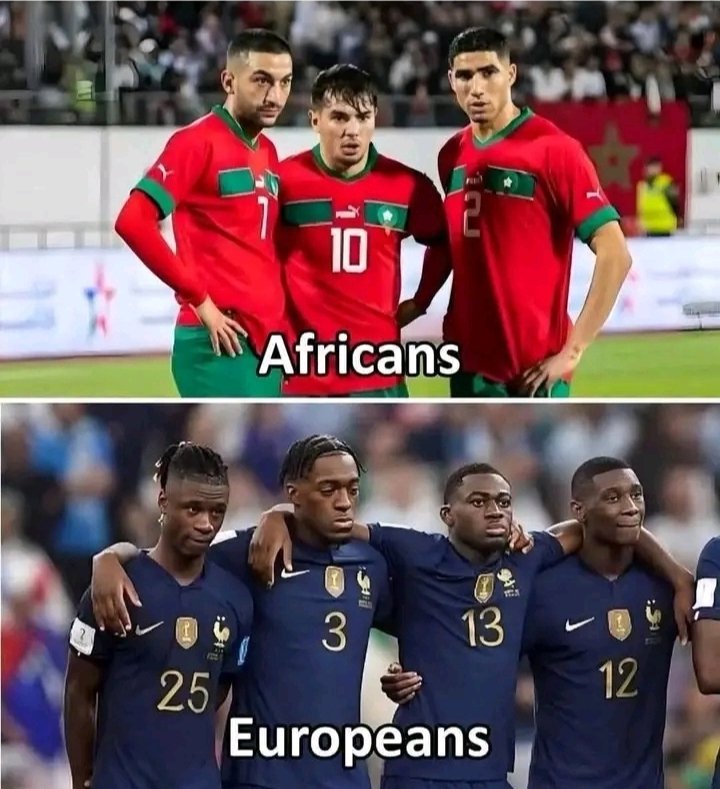
The incredible diversity among numerous national teams was one of the tournament’s most prominent features. Players from a variety of ethnic and cultural backgrounds came from nations in Europe, North America, South America, Asia, and Oceania. This diversity showed how modern football prioritizes skill, commitment, and collaboration above all else and reflected shifting societies.
The 2026 World Cup offered numerous encouraging instances of inclusivity, respect for one another, and ethnic representation, Fans saw players from many backgrounds cooperating under a single national banner, demonstrating that football is still one of the most powerful symbols of unification in the globe.
Variety Among National Teams.
The 2026 competition demonstrated how football has changed over time. Players from all across the world made up a large number of national teams. Multicultural teams that represented their varied populations continued to be advantageous for European countries like France, England, Belgium, Germany, the Netherlands, Portugal, and Switzerland.
In a similar vein, nations outside of Europe also demonstrated growing variety. While retaining strong national identities, a number of teams included players of mixed ancestry or foreign family histories. Rather than race or ethnicity, selection was based on eligibility, talent, and commitment.
Even Japan, which has a reputation for choosing players who are primarily ethnically Japanese, showed how modern football is evolving by incorporating players with a wider range of experiences and backgrounds. This demonstrated how, as cultures change and possibilities for gifted athletes increase, football is becoming more inclusive.
Supporters began praising players for their technical skill, self-control, inventiveness, and dedication to their teams rather than their race. You can explore more Fifa World Cup 2026 moments here.
Football Is Growing More Inclusive.
Football has struggled with racial abuse, discrimination, and inequity for decades. Through education, awareness campaigns, tougher disciplinary actions, and public lobbying, governing bodies, clubs, leagues, players, and supporters have attempted to address these issues.
The notion that everyone can play football was reaffirmed by the 2026 World Cup. Millions of fans from several nations who spoke various languages but shared a love for the beautiful game flocked to stadiums.
Regardless of the outcome, players hugged each other after games. Regardless of a player’s ethnic background, supporters praised outstanding performances, made friends, and traded jerseys.
Even while there are still sporadic instances of racism in football, competitions like the World Cup show that sportsmanship and respect are more important than bigotry.
African Football Achieves New Heights(FIFA World Cup 2026).
The outstanding development of African football was arguably one of the tournament’s greatest achievements.
For a long time, African countries were recognized for producing athletes with extraordinary power and speed. Nonetheless, detractors occasionally claimed that African teams’ tactical consistency and discipline hindered them in important competitions.
Many of these outdated preconceptions were called into question by the 2026 World Cup.
African teams demonstrated sophisticated attacking football, organized midfield play, intelligent pressing, disciplined defending, and current tactical systems. Their results demonstrated years of dedication to professional player development, sports science, coaching, and youth development.
A number of African sides showed that the distance between continents is still closing by competing with assurance against established football powerhouses.
Improved Youth Development and Coaching(FIFA World Cup 2026).
Africa has improved in part because of the greater focus on youth academies and professional coaching.
Nowadays, a lot of African football players start their careers in organized development programs before joining professional teams in Africa, Europe, or Asia. Tactical awareness, positional discipline, decision-making, and technical quality have all increased with exposure to top-tier coaching.
Additionally, national federations have increased their funding for player development and coaching education, creating teams that can compete with the best in the world.
African teams increasingly played as structured, tactically disciplined groups rather than depending only on individual skill.
Football Fans Around the World Can Enjoy It.
From the first game to the knockout stages, the 2026 World Cup featured thrilling football.
Attacking football, thrilling comebacks, magnificent goals, excellent goalkeeping, and memorable moments of individual talent were all enjoyed by supporters.
swift passing combinations, intense pressing, deft ball movement, and swift counterattacks were common features of games that kept fans enthralled.
Fans were also introduced to up-and-coming football nations through the extended competition, which showed remarkable quality despite their lack of prior global success.
The competition was thrilling and unpredictable because of this diversity.
Asian Football’s Ascent(FIFA World Cup 2026).
Asian football has also been steadily improving.
Asian teams outperformed conventional football powers in terms of tactical sophistication, defensive organization, and confidence.
Technical skill, discipline, and collaboration may successfully compete against physically stronger opponents, as shown by South Korea, Japan, and a number of other Asian countries.
Asian athletes now frequently participate in the premier leagues in Europe, acquiring experience that helps their national teams.
Decades of investment in professional league growth, coaching, and youth football were reflected in their performances.
Collaboration Over Individual Notoriety(FIFA World Cup 2026).
The value of teamwork was another distinctive feature of the 2026 World Cup.
Despite the participation of numerous international superstars, success increasingly relied on teamwork rather than individual genius.
Coaches placed a strong emphasis on defensive discipline, coordinated pressing, tactical adaptability, and smooth transitions between attack and defense.
Teams that depended primarily on a few well-known players were frequently outperformed by cohesive squads.
This proved that collaboration, communication, and planning are just as important to modern football as individual skill.
Football as a Cross-Cultural Link.
Football’s capacity to unite people is one of its biggest advantages.
Numerous instances of international supporters rejoicing together, sharing cultural customs, and forming enduring friendships were provided during the World Cup.
While honoring one another’s cultures, supporters filled stadiums with music, flags, traditional attire, and colorful celebrations.
Global television viewers witnessed not only elite football but also the variety of participant countries.
One of the tournament’s greatest accomplishments is still this cross-cultural interaction.
Technology Enhanced Equity(FIFA World Cup 2026).
Technology was a significant factor in the competition as well.
FIFA World Cup 2026 introduced several technologies namely ; Goal-line technology, sophisticated player monitoring, Video Assistant Referee (VAR), and enhanced officiating equipment all contributed to fewer contentious calls.
Technology boosted confidence that significant judgments were based on thorough examination rather than just human error, even while refereeing arguments persisted, as they often do in sports.
A more equitable competition was made possible by the combination of technology and knowledgeable authorities. You can discover how World Cup tournaments have be evolving since its inception here.
A New Wave of Football Superstars(FIFA World Cup 2026).
Exciting new talent is introduced at every World Cup, and the FIFA World Cup 2026 edition was no exception.
Young players from Africa, Asia, Europe, the Americas, and Oceania announced themselves on football’s grandest platform with brave performances.
These up-and-coming players proved that football has a truly global future.
Fans saw players from various football-related countries exhibit extraordinary technical skill, tactical acumen, inventiveness, and self-assurance.
Teachings Beyond Football.
The World Cup also served as a reminder that opportunity, not background, is the key to success.
At the top level, players from varied communities, immigrant families, wealthy cities, and rural villages competed.
Millions of young people were motivated by their experiences to think that many challenges can be solved with commitment, self-control, and hard work.
Football offers potent examples of collaboration, respect, and a common goal, even though it cannot address every societal issue.
Actionable takeaways
In conclusion.
The FIFA World Cup 2026 showed how international football is always evolving. By presenting heterogeneous teams from throughout the globe, the competition highlighted diversity and reaffirmed the idea that skill, dedication, and performance—rather than race or ethnicity—are the main criteria for selection.
At the same time, African countries demonstrated their increasing power by playing sophisticated, entertaining football that delighted fans all over the world. While traditional football powers faced fiercer competition from every continent, Asian teams also maintained their remarkable growth. The 2026 World Cup provided numerous encouraging instances of inclusivity, respect, and solidarity, despite the fact that racism is still a problem in sports. It served as a reminder that football is more than just a game; it is a universal language that can inspire future generations, unite people from different cultural backgrounds, and celebrate the diversity that makes the sport genuinely global.