
FIFA World Cup 2030: The Centennial Tournament Across Three Continents

FIFA World Cup 2030
Author : Sinclair Amani, Luminous Writer.
 
One hundred years after Uruguay welcomed the first FIFA World Cup, the tournament will return to South America before crossing the Atlantic for its main celebration in Africa and Europe. The FIFA World Cup 2030 is set to be unlike any previous edition, combining football history, international cooperation, and a hosting model spanning six countries and three continents.
Morocco, Portugal, and Spain will host the main tournament, while Argentina, Paraguay, and Uruguay will each stage a centenary celebration match. FIFA says the arrangement is intended to honor the competition’s origins while reflecting football’s global reach.

A Century of World Cup History

The story of the 2030 tournament begins in Uruguay. In 1930, the country hosted the first FIFA World Cup, a competition featuring 13 national teams. Uruguay defeated Argentina 4–2 in the final at the Estadio Centenario, becoming the first world champions in men’s international football.
The competition has since grown from a pioneering tournament in Montevideo into one of the world’s most watched sporting events.
The centenary matches in Uruguay, Argentina, and Paraguay will connect the modern competition to its South American origins.

A Significant Choice for the 2030 FIFA World Cup.

FIFA World Cup Trophy 2030

FIFA formally announced in December 2024 that Morocco, Portugal, and Spain would co-host the 2030 FIFA World Cup. You can  explore more information here. FIFA’s goal of uniting continents while honoring football’s rich past is reflected in the decision.

In contrast to past World Cups, the competition will start in South America and then proceed to Europe and Africa for the duration of the competition. This unique format embraces the global scope of the game while acknowledging the origin of World Cup football.

The inaugural festivities will begin in:

Uruguay, Argentina, and Paraguay and each country will host one official FIFA World Cup opening match.

Before all participating countries go to Morocco, Portugal, and Spain to play the rest of the tournament, including the knockout stages and final. 

Uruguay: The Origin of the World Cup.
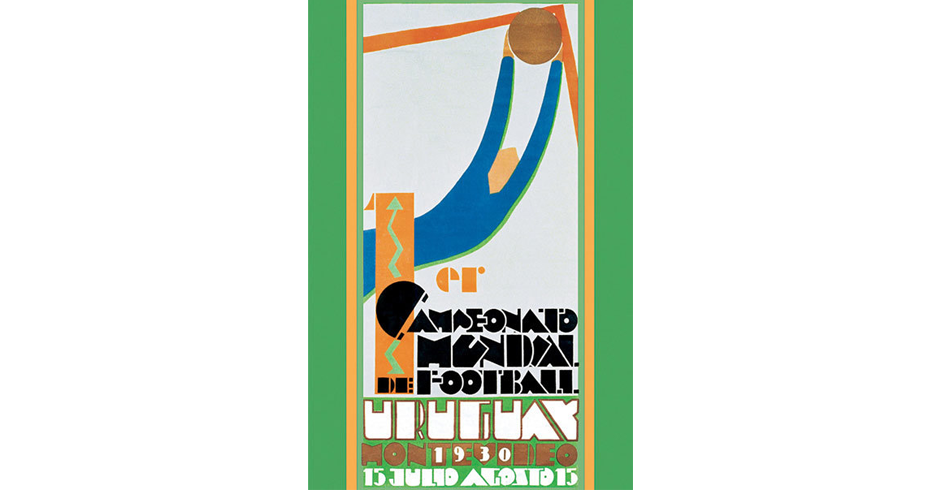
fifa world cup 1930

Uruguay was the first nation to host the FIFA World Cup in 1930, marking the beginning of the tournament’s history.

In the first competition, just thirteen national teams took part. It set the stage for what would grow to be the biggest sporting event in the world, while being far smaller than today’s enlarged competitions.

Uruguay defeated Argentina 4-2 in the final at the legendary Estadio Centenario in Montevideo to become the first-ever FIFA World Cup champions.

Uruguay will host one of the opening games of the FIFA World Cup 2030, welcoming the football world once more exactly one hundred years later. You can  explore more information here

A new generation of supporters can celebrate where the World Cup adventure started thanks to the symbolic return to Uruguay, which recognizes the nation’s invaluable contribution to football history.

How the Six-Country Hosting Model Will Work

The six countries will not have identical responsibilities. Morocco, Portugal, and Spain are the primary hosts of the 2030 FIFA World Cup. Argentina, Paraguay, and Uruguay will each host one centenary celebration match, according to FIFA’s official announcement.
This differs from a conventional co-hosted competition. The celebration begins in South America before the principal competition continues in Morocco, Portugal, and Spain.
The arrangement gives South America a central role in the centenary, enables Morocco to host the men’s World Cup for the first time, and allows Portugal and Spain to showcase their football cultures through a shared Iberian partnership.
However, the format creates practical questions about long-distance travel, border procedures, costs, transport, security, broadcasting, and scheduling.
For example, a supporter attending a centenary match in Montevideo, Buenos Aires, or Asunción and then traveling to a group-stage match in Madrid, Lisbon, or Casablanca would experience two distinct football regions during one tournament. That possibility is exciting, but it highlights the need for clear travel guidance and affordable connections. Exact fixtures, dates, and venue assignments should be confirmed through official updates before fans make plans.

Morocco Creates Football History in Africa(Fifa world cup 2030).

Morocco’s participation as one of the official hosts of the FIFA World Cup 2030 is one of its most remarkable narratives.

After South Africa hosted the FIFA World Cup in 2010, Morocco is now only the second nation in Africa to do so.

After multiple fruitless attempts, Morocco’s long-standing goal to host the largest football championship in the world has been rewarded with the selection.

Over the past ten years, Morocco’s football infrastructure has significantly improved, with state-of-the-art stadiums, high-speed transit, modernized airports, and first-rate lodging prepared to host millions of tourists.

Morocco’s international football reputation was further enhanced by its outstanding performance in the FIFA World Cup Qatar 2022, where it became the first African side to get to the semi-finals.


What Each Host Nation Brings

Morocco: A milestone for African football

Morocco’s role carries special historical importance. South Africa hosted the men’s FIFA World Cup in 2010, so Morocco is positioned to become the second African country to host the competition if the planned tournament proceeds as announced.
The selection also follows Morocco’s outstanding performance at the 2022 World Cup, when it became the first African men’s team to reach the semifinals. That achievement strengthened the country’s reputation and increased international attention on its stadiums, football academies, transport systems, and hospitality sector.
Hosting the World Cup could create opportunities for tourism, investment, and infrastructure development. Those benefits should be treated as possibilities rather than guarantees, since their scale will depend on planning, public spending, visitor distribution, and the long-term use of facilities.

Spain: Experience and football culture

Spain will return as a World Cup host after staging the competition in 1982. It brings established football expertise, recognized clubs, transport networks, and cities with strong sporting identities. The final venue list should be confirmed by the relevant authorities.

Portugal: A first World Cup as host

Portugal has hosted major football events, including UEFA Euro 2004, but has not previously hosted the men’s FIFA World Cup. Its partnership with neighboring Spain is natural because the two countries share a border, football traditions, and relatively close transport links. Portugal can contribute modern stadiums, experienced event professionals, and a passionate supporter culture.

Argentina, Paraguay, and Uruguay

The three South American nations will provide the tournament’s historical opening chapter. Uruguay symbolizes the competition’s origin, Argentina brings a deep World Cup tradition shaped by legends such as Diego Maradona and Lionel Messi, and Paraguay represents the wider contribution of South American football. Because each country is scheduled to host a centenary celebration match, its role should be described accurately: these nations are central to the anniversary, but they are not the primary hosts of the main tournament.

One Tournament, Three Continents

The 2030 World Cup will create a rare cultural experience. Supporters could encounter South American football heritage, Iberian urban culture, and Morocco’s North African traditions during the same event. Different languages, cuisines, climates, stadium atmospheres, and styles of hospitality will become part of the tournament’s identity.
The format also raises serious challenges. Long-distance flights could increase the event’s environmental footprint. Traveling fans may face higher costs, while teams may have to manage fatigue and recovery across widely separated locations. Organizers will need to consider accessibility, public transport, accommodation, safety, and the affordability of attending more than one match.
The success of the three-continent model will depend on whether organizers can turn geographical complexity into meaningful connection rather than unnecessary inconvenience.

Economic Impact and Long-Term Legacy

Hosting a World Cup can create opportunities for visitor spending, employment, transport improvements, urban regeneration, and international investment. Benefits may extend beyond match days if upgraded facilities remain useful to residents.
Yet major sporting events can also involve substantial public expenditure. A responsible assessment should ask who receives the economic benefits, how construction is financed, whether local businesses are included, and what happens to venues after the final whistle.
The hosts may experience different forms of legacy. Morocco may use the event to accelerate tourism and showcase its football infrastructure. Spain and Portugal may benefit from existing transport and stadium networks, while the South American centenary matches may deliver greater symbolic value than large-scale tournament infrastructure. A successful legacy should be measured by local employment, affordable access, improved public facilities, environmental planning, transparent governance, and opportunities for young people to participate in football.

Looking Ahead to Saudi Arabia 2034

The 2030 World Cup is part of a wider conversation about the future geography of international football. FIFA has selected Saudi Arabia to stage the 2034 FIFA World Cup. Together, the 2030 and 2034 decisions demonstrate the sport’s continued movement toward new regions and markets.
Saudi Arabia has invested heavily in football, tourism, stadiums, transport, and national development projects. At the same time, its hosting plans have generated debate about labor conditions, human rights, transparency, climate, and match scheduling. These issues should be examined through reputable reporting and official documentation rather than unsupported claims.
The comparison shows that hosting a World Cup is also about governance, finance, infrastructure, reputation, and responsibility.

Conclusion: A Centennial Celebration With Global Responsibility

The FIFA World Cup 2030 will connect the competition’s first century with its next one. Its most powerful image may be the link between Uruguay’s Estadio Centenario, where the first final was played in 1930, and the modern stadiums of Morocco, Portugal, and Spain, where the main tournament will unfold.
Argentina, Paraguay, and Uruguay give South America a meaningful place in the centenary, while Morocco, Portugal, and Spain provide the principal stage.
Its success, however, will depend on more than memorable matches. Organizers must provide efficient transport, affordable access, environmental responsibility, transparent investment, and genuine benefits for host communities. Readers should follow official updates, verify fixtures and venues, learn about the host countries, and evaluate the tournament’s long-term impact.
The 2030 World Cup can honor football’s first century most meaningfully by ensuring that its next century is more connected, responsible, and inclusive.

2 thoughts on “FIFA World Cup 2030: The Centennial Tournament Across Three Continents”

Leave a Comment

Your email address will not be published. Required fields are marked *